
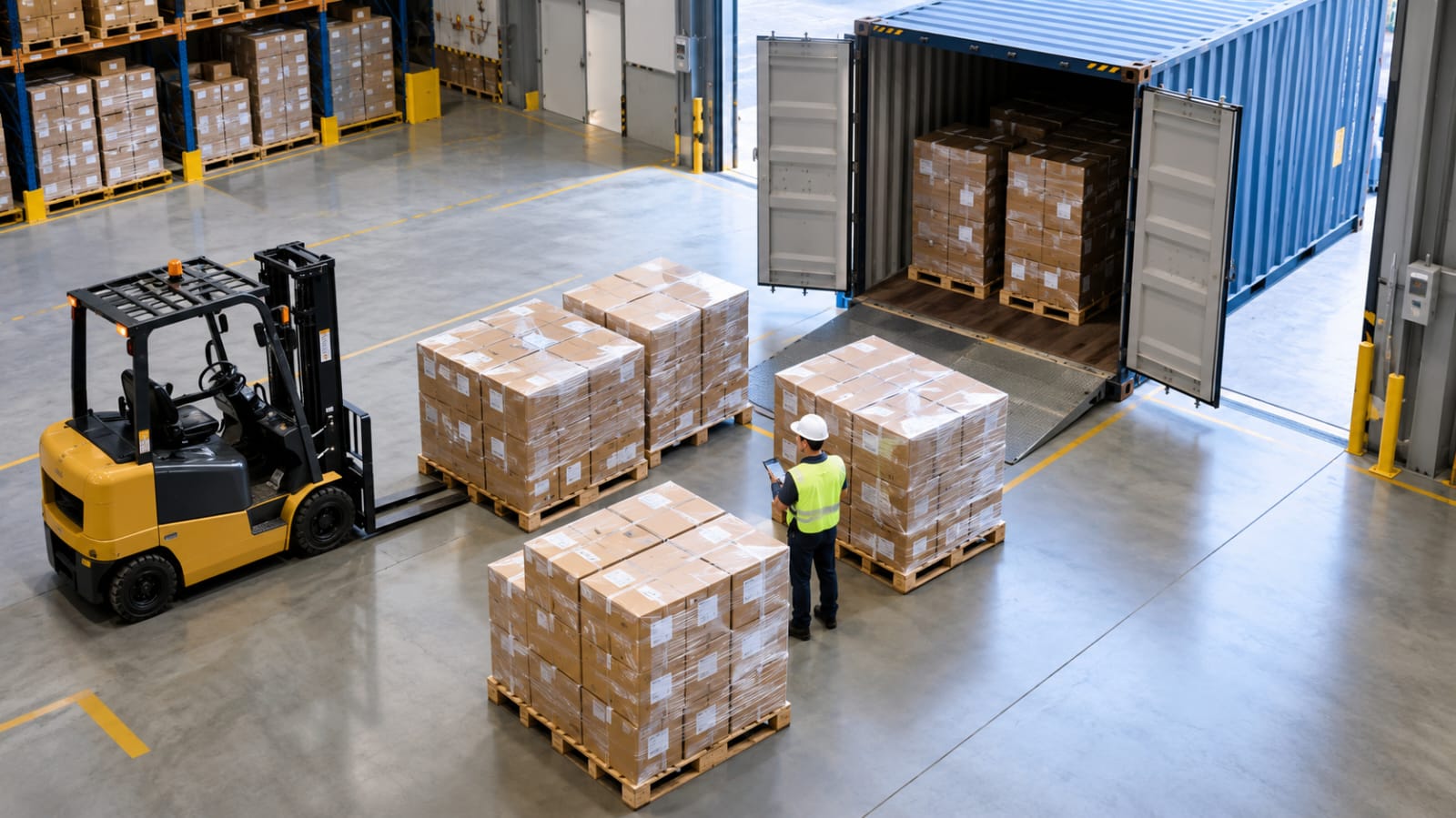

Importing goods from overseas manufacturers is one of the most effective ways to scale a product business and improve profit margins. However, for small businesses, navigating international logistics can quickly become complex and costly. Between unexpected port fees, customs clearance hurdles, and freight delays, managing cargo requires strategy.
If you are wondering how to manage shipping for a small business, this comprehensive guide walks you through essential small business shipping tips and critical logistics dos and don’ts to keep your supply chain efficient.
Understanding the Cost Challenge of Small Shipments
When importing lower volumes, small businesses often struggle with high per-unit freight rates. Shipping individual boxes via express air courier provides speed, but it erodes profit margins. On the other hand, renting an entire 20-foot or 40-foot container (Full Container Load / FCL) is rarely cost-effective unless you have high-volume inventory.
To optimize small shipments, you must leverage consolidated ocean freight and smart packaging strategies to maintain profitability.
Essential Small Business Shipping Tips
1. Consolidate Your Shipments (LCL Shipping)
Instead of paying for empty container space, utilize Less-than-Container Load (LCL) shipping. LCL allows you to share container space with cargo from other importers, meaning you only pay for the exact volume (CBM – Cubic Meters) your goods occupy.
If you source products from multiple factories in China, work with an on-ground partner who can aggregate your goods at a single warehouse before loading. Learn how our team handles seamless Cargo Pickup & Consolidation Services directly at Chinese shipping hubs.
2. Standardize Packaging to Eliminate Dimensional Weight Fees
Carriers calculate freight costs using either actual weight or volumetric (dimensional) weight—whichever is higher.
-
Optimize box dimensions: Eliminate excess empty space inside cartons to reduce volumetric weight.
-
Protect against damage: Use double-walled corrugated boxes, corner protectors, and export-grade wooden pallets for fragile machinery or electronics.
-
Pre-mark packages: Ensure pallets are clearly labeled with shipping marks, weight warnings, and origin tags to streamline airport and seaport handling.
3. Choose the Right Incoterms (FOB vs. DDP)
Incoterms define whether you or your manufacturer is responsible for shipping costs, insurance, and customs duties.
-
FOB (Free on Board): The supplier handles domestic transit to the export port. You control the international freight forwarder and ocean rates.
-
DDP (Delivered Duty Paid): The freight forwarder handles the entire transit chain—including origin pickup, ocean/air transport, customs clearance, duties, and door delivery. DDP is ideal for small businesses seeking a hands-off experience.
To avoid unexpected border holds, read our guide on Why China Import Shipments Get Stuck at Customs (And How to Avoid It).
4. Audit Factory Quality Before Dispatch
The most expensive freight cost is shipping defective inventory across the globe. Once a shipment leaves the country of origin, returning goods for replacement becomes nearly impossible due to reverse logistics costs and export duties.
Always conduct on-site pre-shipment inspections before your supplier packs the cargo. Explore our full range of on-ground Strict Quality Control (QC) & Factory Vetting Services to safeguard your shipments.
The Complete Checklist: Logistics Dos and Don’ts
| Category | Do’s 🟢 | Don’ts 🔴 |
| Provider Selection | Do partner with experienced freight forwarders offering door-to-door tracking. | Don’t rely on unverified factory shipping quotes without itemized port charge breakdowns. |
| Customs Compliance | Do verify exact HS Code classifications to apply accurate tariff rates. | Don’t misdeclare invoice values to lower duties; this risks heavy border penalties. |
| Transit Planning | Do plan inventory around major seasonal freight spikes (Q4 holidays, pre-CNY). | Don’t book urgent air freight for bulk goods when sea freight or rail shipping suffices. |
| Cargo Safety | Do secure marine transit insurance for high-value machinery and bulk cargo. | Don’t skip palletizing mixed-box shipments prone to crush damage. |
Call to Action (Website CTA)
Ready to Optimize Your Overseas Supply Chain?
Stop overpaying on small shipments and navigating complex customs paperwork alone. At Shenzhen Confia, we provide end-to-end global sourcing, factory audits, customs brokerage, and door-to-door freight forwarding.
👉 Get a Free Logistics Consultation & Freight Quote at bizbuyseek.com