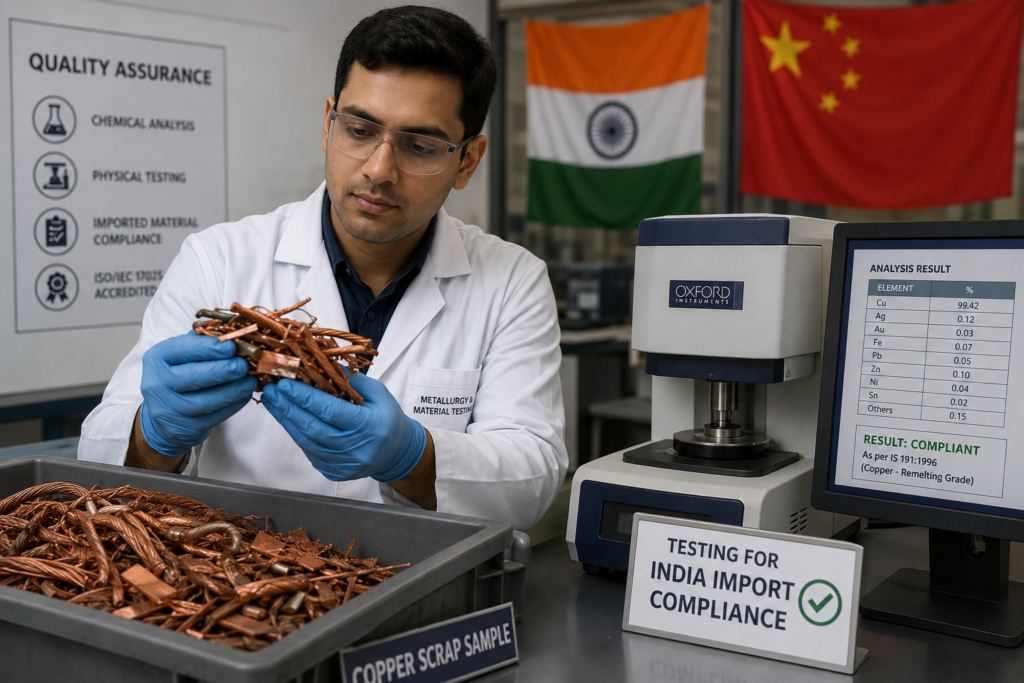
India is one of the largest consumers of copper scrap globally, sourcing significant volumes from China and other exporting nations. But importing copper scrap is not as simple as placing an order and waiting for the shipment. Two critical steps — laboratory testing and quantity inspections — can be the difference between a smooth import and a costly customs disaster.
At Shenzhen Confia International Trade Co., Ltd., we’ve helped dozens of Indian importers navigate this complex process successfully. In this guide, we break down exactly why these two steps are non-negotiable.
What Is Copper Scrap and Why Does India Import It?
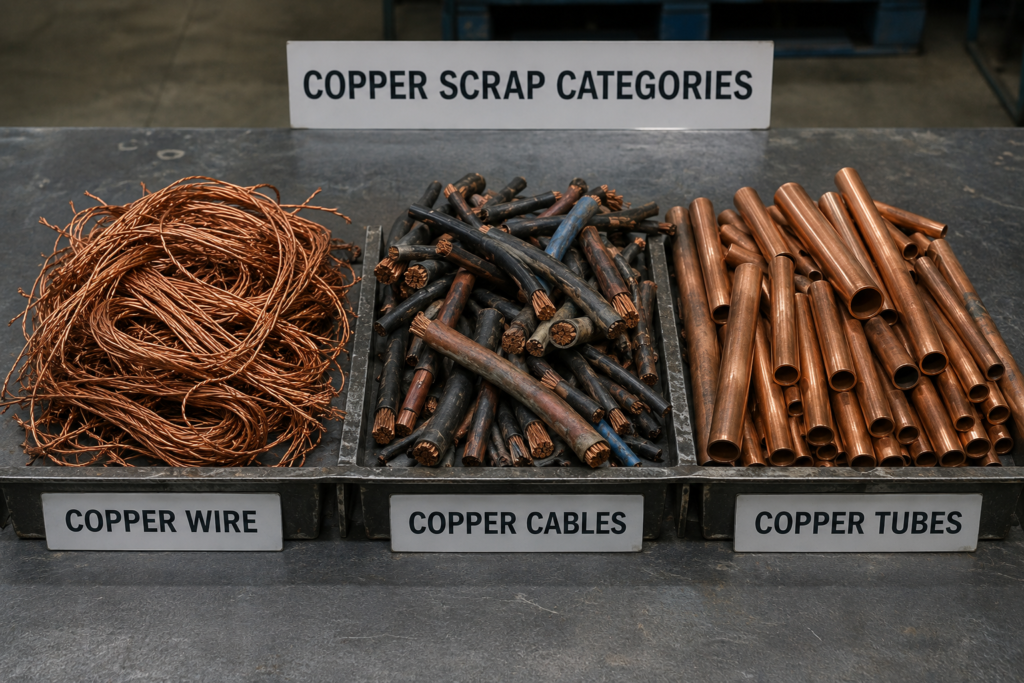
Copper scrap includes recycled copper wire, tubes, cables, and mixed copper materials. India’s growing electronics, construction, and electrical industries drive massive demand for affordable copper raw material. China remains a top supplier due to its well-established recycling infrastructure.
However, Indian customs and regulatory authorities apply strict standards to all scrap metal imports — making pre-shipment due diligence absolutely essential.
Why Lab Testing Is Non-Negotiable
1. Compliance with India’s CPCB & BIS Standards
India’s Central Pollution Control Board (CPCB) and Bureau of Indian Standards (BIS) mandate that imported copper scrap must meet specific purity and contamination thresholds. Shipments failing these tests can be:
- Detained at the port
- Sent back to the country of origin
- Fined heavily under Indian customs law
A certified third-party lab test conducted before shipment from China ensures your copper scrap meets India’s Hazardous Waste (Management, Handling and Transboundary) Rules.
2. Verify Copper Purity and Grade
Not all copper scrap is equal. Lab testing verifies:
- Copper content percentage (minimum thresholds vary by grade)
- Lead, cadmium, and mercury levels (must fall below CPCB limits)
- Moisture content
- Presence of radioactive materials (mandatory scan)
3. Avoid Insurance and LC Disputes
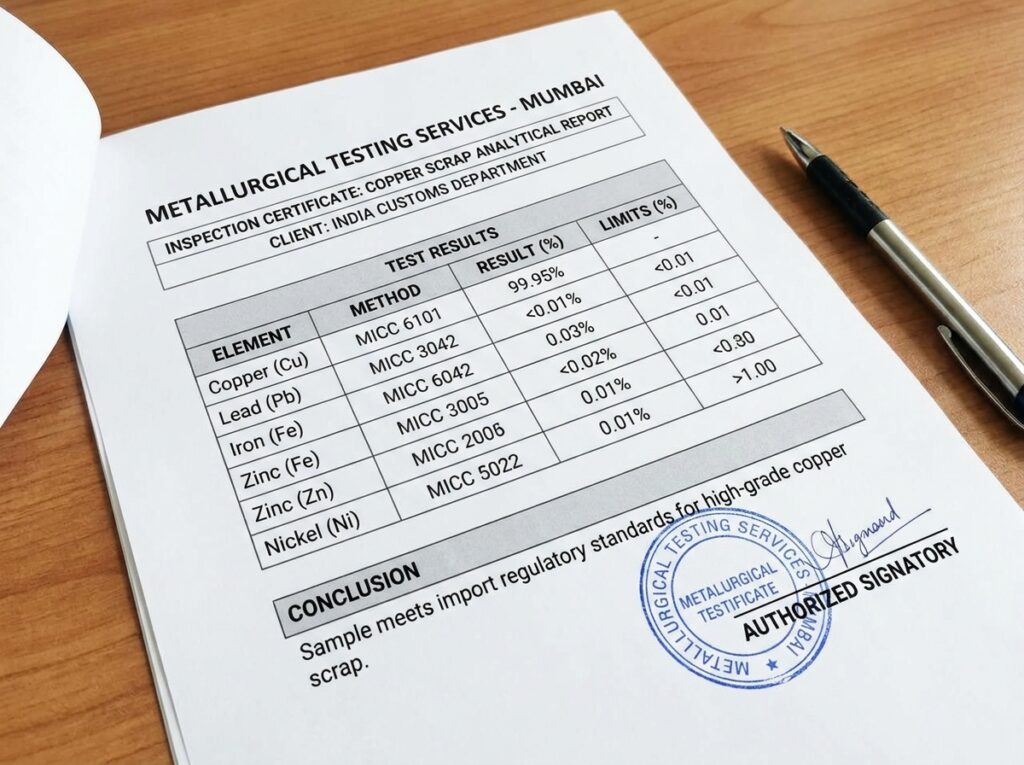
When your Letter of Credit (LC) specifies grade or purity, lab test certificates serve as legally binding proof of compliance. Without them, your bank or trading partner can dispute payment.
Why Quantity Inspection Matters
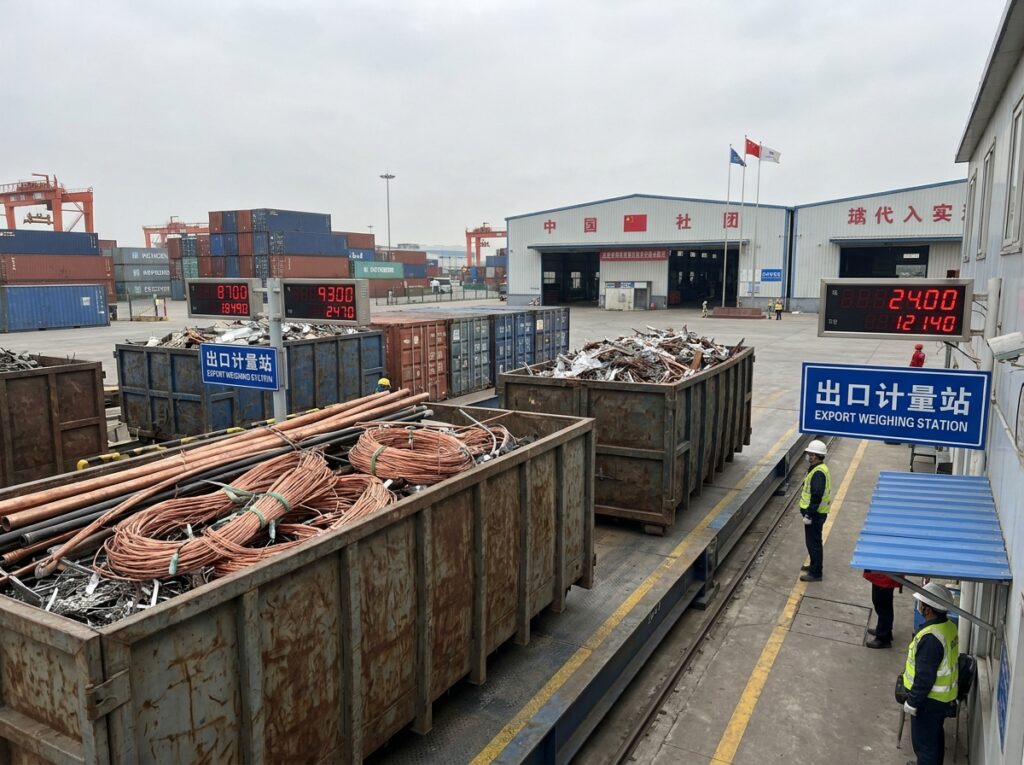
1. Protect Against Short-Weight Shipments
One of the most common issues in copper scrap trade is short-weight shipments — where the actual weight delivered is significantly less than what’s invoiced. Without a pre-shipment quantity inspection:
- You pay for metal you never receive
- Recovering losses cross-border is extremely difficult
- Customs documents become inconsistent
2. Accurate HS Code Classification
Indian customs classifies copper scrap under specific HS codes (e.g., 7404.00). Quantity and composition data from inspections ensure the correct HS code is applied, preventing:
- Customs delays
- Misdeclaration penalties
- Seizure of goods
3. Documentation for BIS & Port Authorities
Port authorities in major Indian import hubs like Nhava Sheva (JNPT), Chennai, and Mundra require quantity certificates as part of the import documentation checklist.
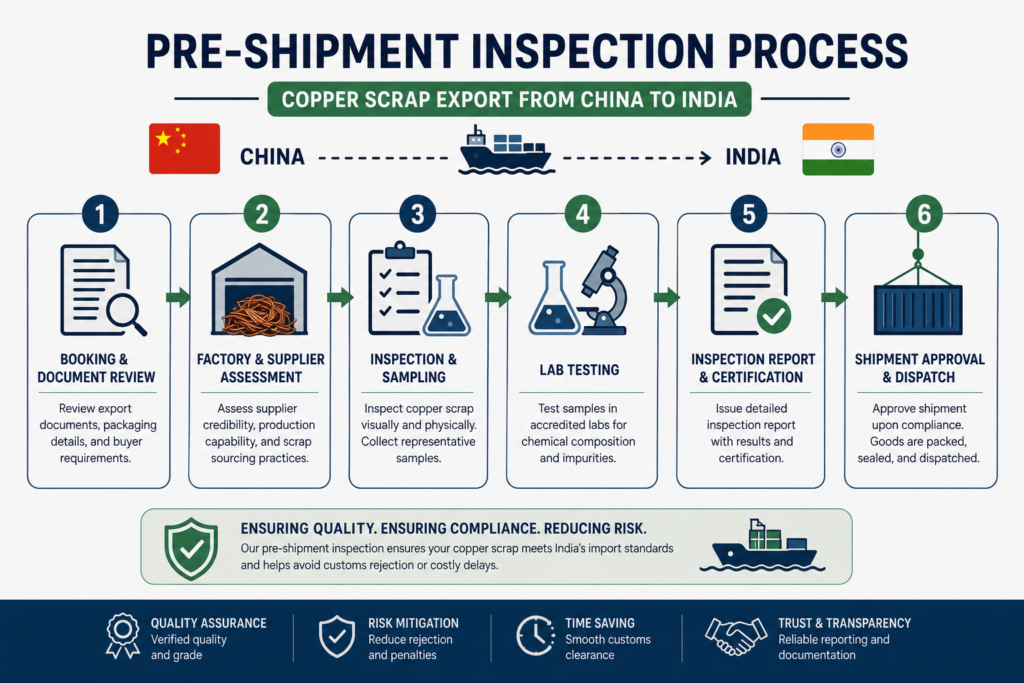
The Recommended Pre-Shipment Inspection Process
Here’s a simplified inspection workflow Shenzhen Confia recommends for all copper scrap shipments to India:
| Step | Action | Who Does It |
|---|---|---|
| 1 | Sorting & segregation of scrap | Supplier in China |
| 2 | Quantity weighing (gross & net) | Third-party inspection agency |
| 3 | Lab sample collection | Inspection agency (SGS, BV, Intertek) |
| 4 | Lab test report issuance | Accredited lab |
| 5 | Pre-shipment certificate | Inspection agency |
| 6 | Submission with shipping documents | Exporter/Importer |
Which Inspection Agencies Are Accepted by Indian Customs?
Indian customs generally accepts certificates from internationally recognized agencies:
- SGS (Société Générale de Surveillance)
- Bureau Veritas (BV)
- Intertek
- TÜV Rheinland
Always confirm with your customs broker which agencies are currently approved at your specific port of entry.
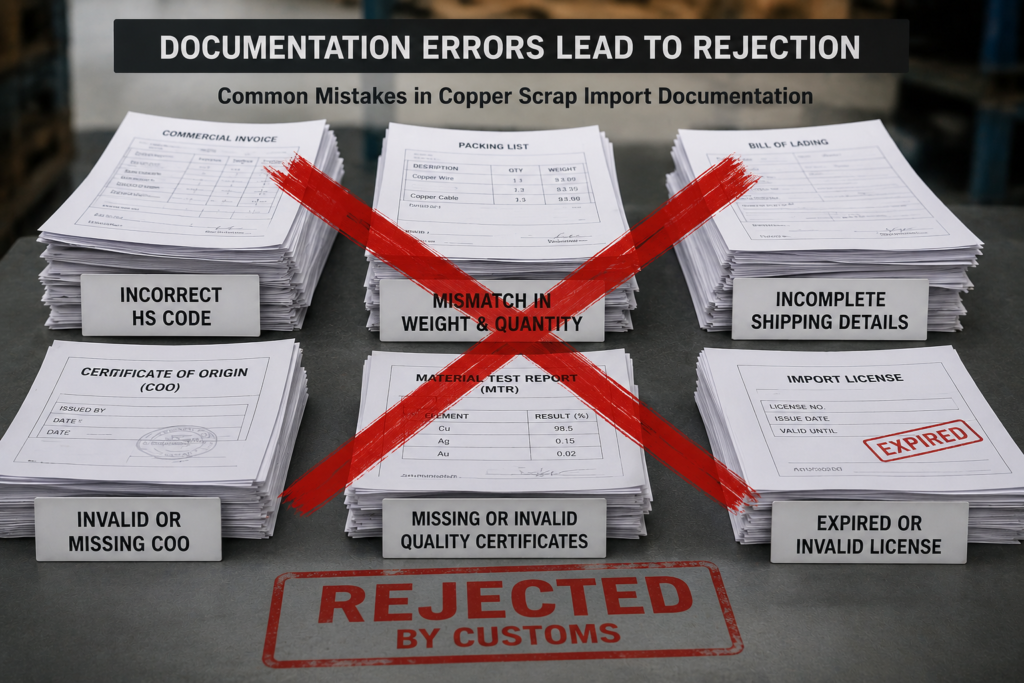
Common Mistakes Indian Importers Make
🚫 Skipping pre-shipment inspection to save cost
🚫 Accepting supplier-provided lab tests instead of independent third-party tests
🚫 Not specifying purity thresholds clearly in the purchase contract
🚫 Using incorrect HS codes on the Bill of Entry
How Shenzhen Confia International Trade Helps
At Shenzhen Confia International Trade Co., Ltd., we specialize in managing the full pre-export compliance process for copper scrap shipments from China to India. Our services include:
- Coordinating with SGS/BV for quantity and quality inspections
- Ensuring CPCB-compliant lab reports before loading
- Preparing complete documentation packages for Indian customs
- Advising on correct HS code classification
Final Thoughts
Lab testing and quantity inspections are not optional extras — they are the foundation of a compliant, profitable copper scrap import operation. Cutting corners here can lead to detained shipments, legal penalties, and financial losses that far outweigh the cost of inspection.
Partner with experienced traders like Shenzhen Confia to ensure every shipment arrives on time, on spec, and fully cleared.
📞 Ready to import copper scrap from China to India? Contact us at BizBuySeek.com